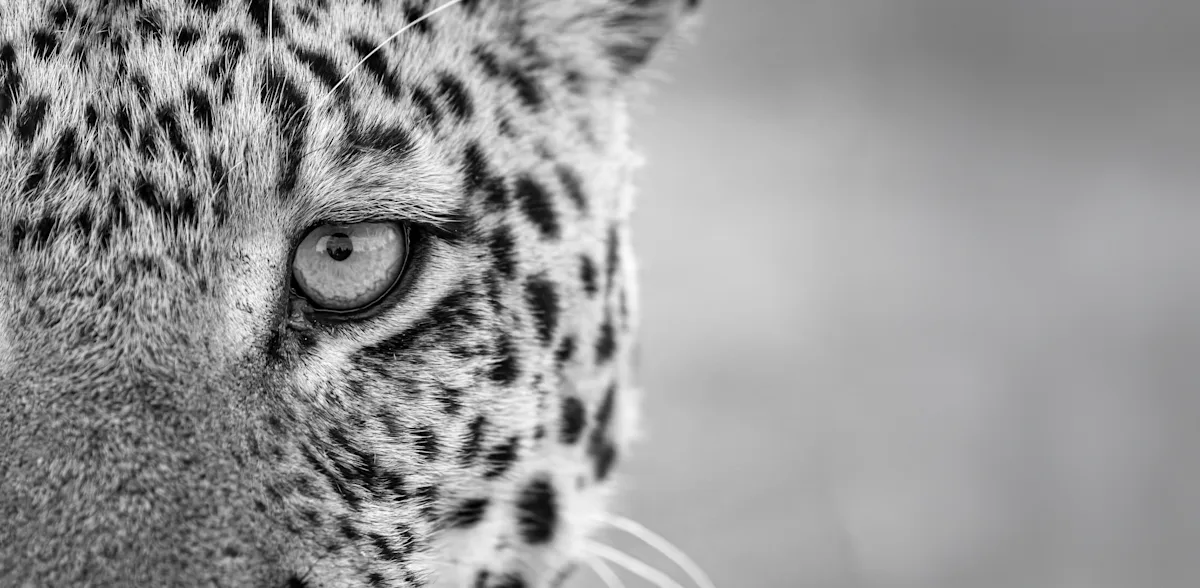
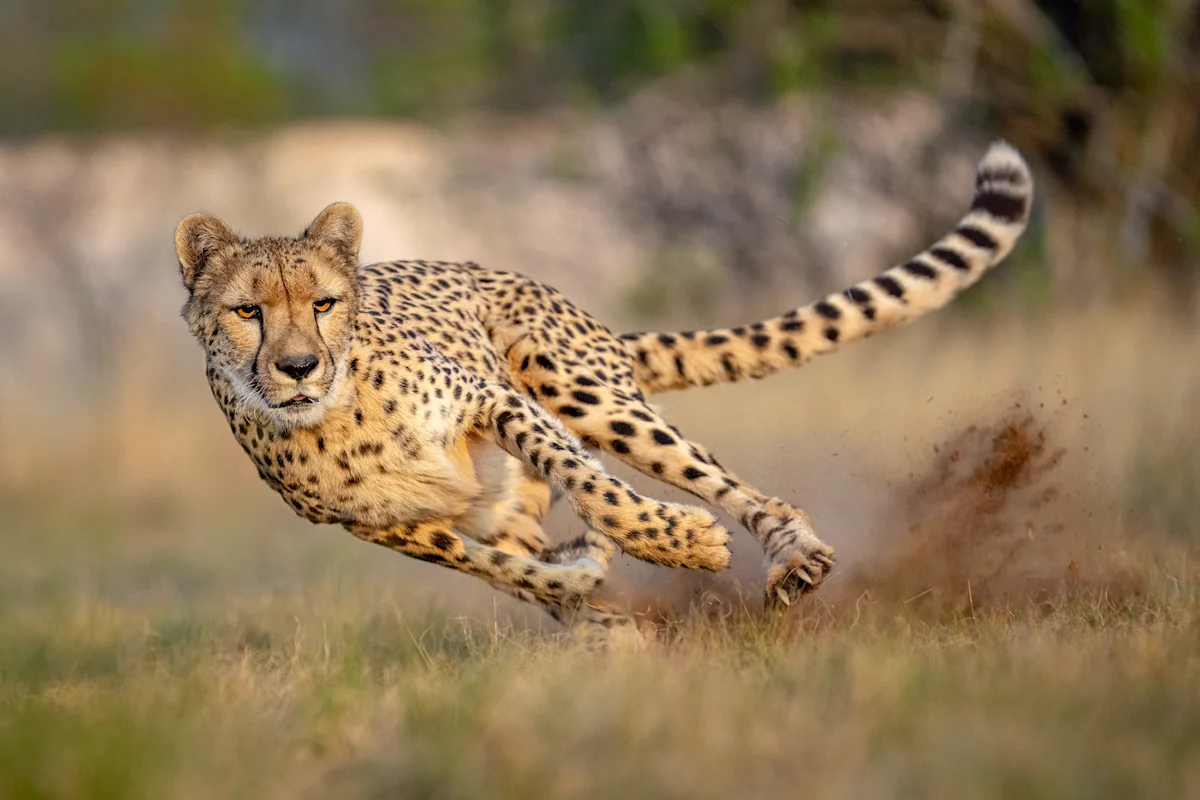
The spectacle of a cheetah running at full speed is art; the anatomy and physique facilitating its speed and agility is genetic engineering at its best.
How fast can a cheetah run?
The cheetah can accelerate from 0 – 60 mph in 3 seconds, making it the fastest land animal on the planet. Yes, even faster than Usain Bolt.
Like Bolt, the cheetah is a sprinter – not a long distance runner – and can only attain high speeds in short bursts due to the tremendous drain on its energy resources. It could take up to 30 minutes for a cheetah to recover from a chase.
acceleration faster than a Ferrari
On the exterior, the cheetah is the most slender of the big cats; its lightweight body (weighing about 80-140 lbs.), small head and long legs are designed for aerodynamics.
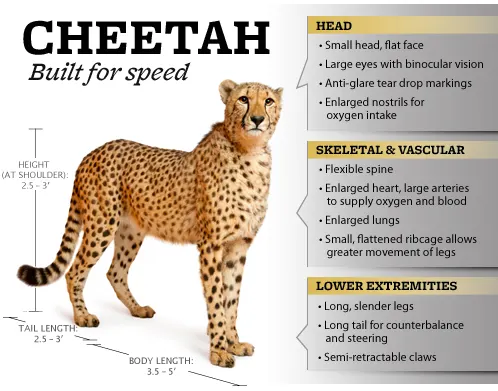
Structurally, the cheetah has a unique, flexible spine, which allows for extreme flexion and extension while running at top speeds. In spine flexion, when the cat’s legs are directly underneath its body, the scapula and hip are able to rotate to such an extreme angle that the cheetah’s front and hind legs overlap.
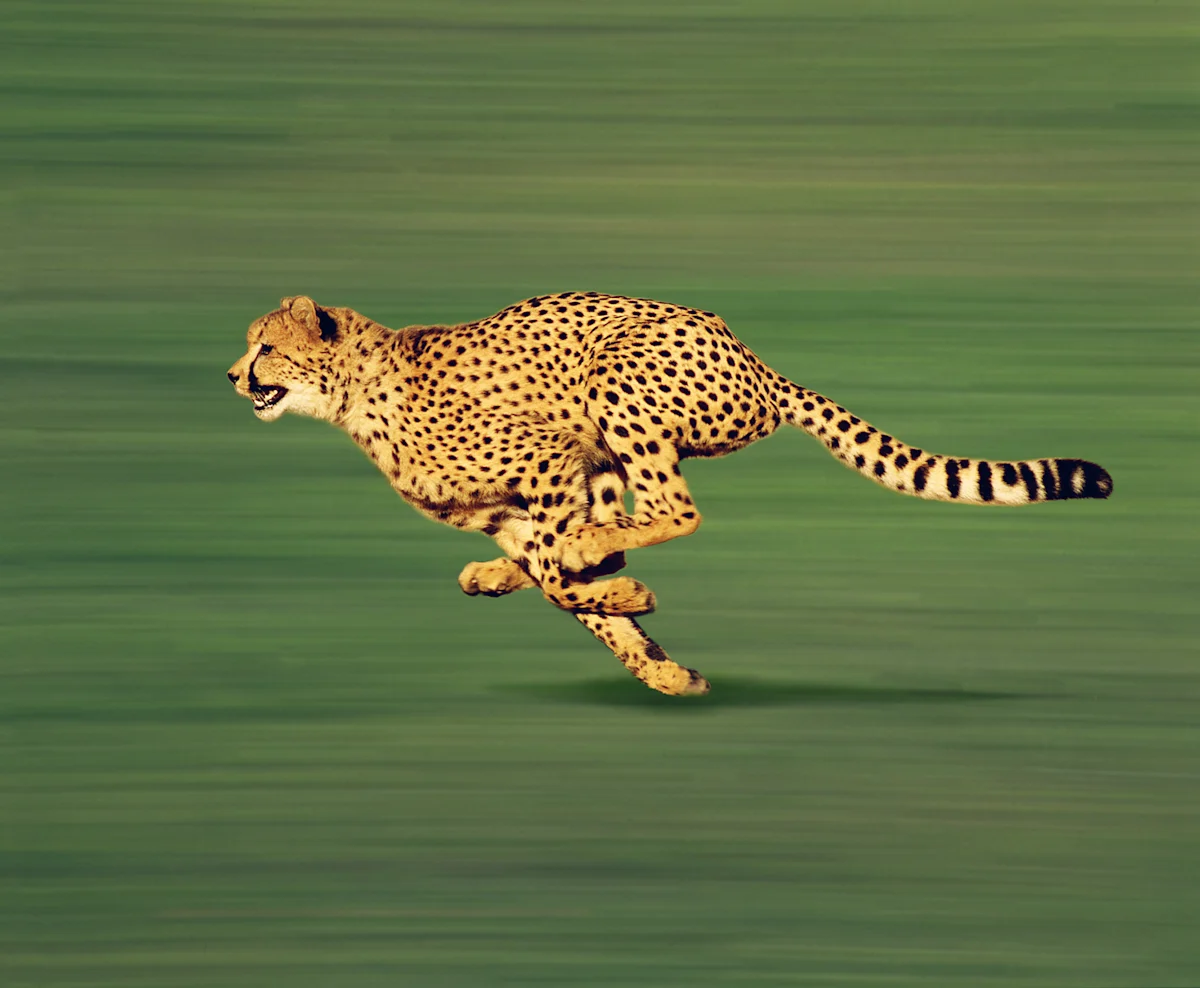
To reach extension, the spine recoils like a spring propelling the cheetah’s legs out; it is this portion of the gait where the cheetah is able to reach strides up to 25 feet.
Lastly, the cheetah is equipped with blunt, semi-retractable claws, which function similarly to soccer cleats. Since its claws never fully retract, like other big cats, they are always at-the-ready to provide powerful traction to the ground.
Watch a cheetah run at top speed
Observing the cheetah’s gait in slow motion in the video above makes the dynamics of the flexible spine easily detectable. You’ll notice that only one foot at time makes contact with the ground all the while, the cheetah’s gaze is unfaltering – it is locked and loaded on its prey. See the claws? Unlike other big cats, they only partially retract. Watch all the way through for bonus behind-the-scenes footage.
Being built for speed comes at a price
Cheetahs’ lightweight bodies and blunt claws are no match for the strength and aggression of others predators such as lions or leopards. If faced to defend itself or its kill, a cheetah would utilize the flight defense instead of fighting. This is one of the many factors challenging female cheetahs, who raise their cubs on their own. Only 10% of cheetah cubs raised in the Serengeti survive to maturity due to the dense population of predators.