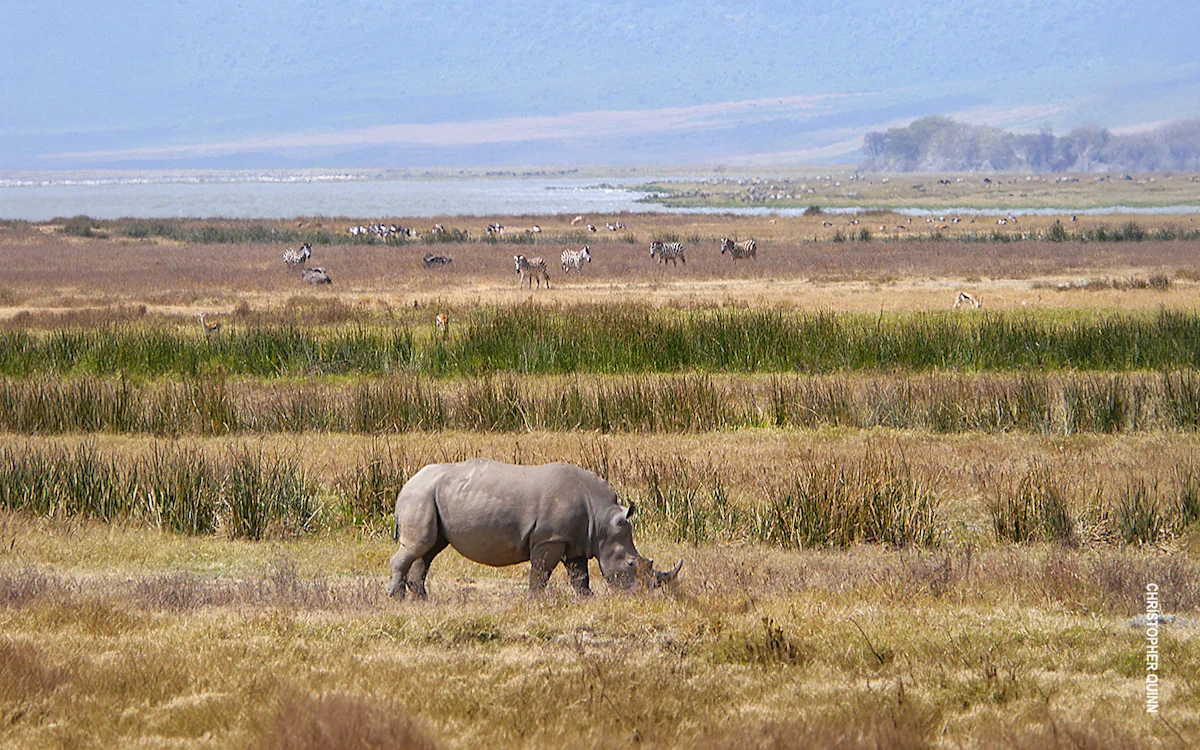
Southern white rhinos were introduced to Ngorongoro Crater as part of an ambitious conservation initiative designed to create a new breeding population in Tanzania. The project aims to secure the species’ future by establishing a genetically diverse population outside South Africa while giving safari travelers the rare chance to observe both white and black rhinos in one of Africa’s most iconic wildlife destinations.
Above: Southern white rhino in Ngorongoro Crater, photographed by Thomson Safaris guest Christopher Quinn in July 2026.
For nearly 50 years, visitors exploring Ngorongoro Crater have had the chance to search for one rhino species: the critically endangered black rhino. In late spring 2026, that changed when southern white rhinos were released into the crater, marking an exciting new chapter in Tanzania’s wildlife conservation story.
The journey began in March 2025, when 18 southern white rhinos were carefully translocated from South Africa to Tanzania. After arriving, the rhinos spent more than a year in secure acclimation enclosures known as bomas, where veterinarians monitored their health, behavior, and adaptation before their release.
The project is part of an innovative strategy known as assisted colonization, in which threatened animals are intentionally introduced to suitable habitats outside their historical range to improve their future survival. As habitat loss, poaching, and other environmental pressures continue to threaten wildlife populations, conservationists are increasingly using this approach to build resilient populations in carefully selected protected areas. In Tanzania, the goal is for the founding group to grow into a genetically diverse, self-sustaining population of approximately 36 southern white rhinos.
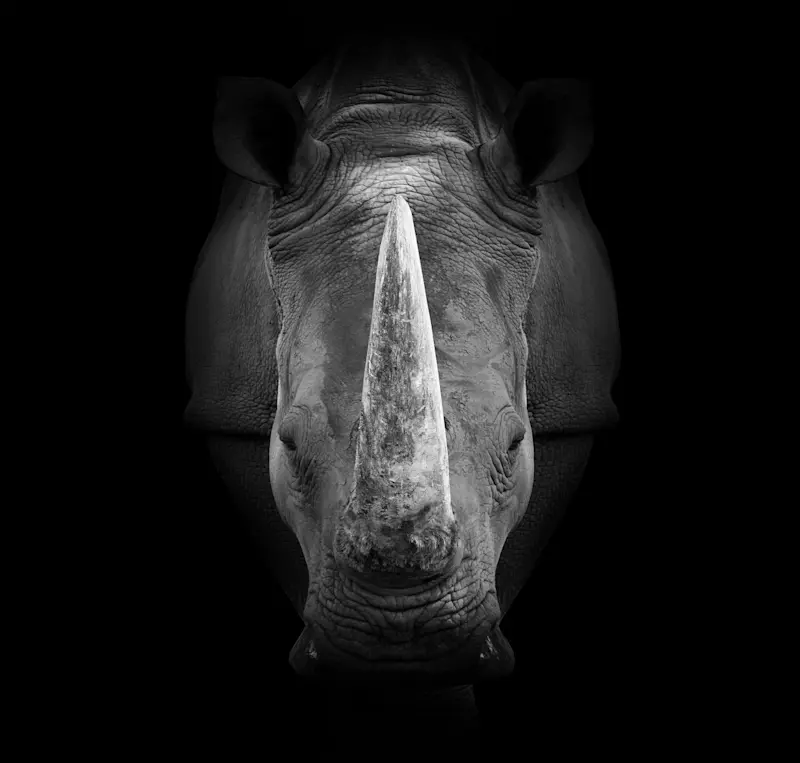
The Conservation Challenge Facing Southern White Rhinos
Southern white rhinos have experienced one of conservation’s greatest success stories — and one of its most significant setbacks.
At the beginning of the 20th century, fewer than 100 southern white rhinos remained in the wild. According to the International Rhino Foundation, decades of conservation efforts helped the population rebound to more than 21,000 animals by 2012. By the end of 2024, however, Africa’s white rhino population had declined to an estimated 15,752 individuals, largely because of poaching.
South Africa remains home to most of the world’s southern white rhinos, but concentrating the majority of the population in one country creates additional risk. Establishing new populations in protected landscapes such as Ngorongoro Crater helps reduce the chance that disease outbreaks, political instability, or increased poaching pressure could dramatically impact the species’ future.
Why Ngorongoro Crater Was Chosen
Although southern white rhinos did not historically occur in Ngorongoro Crater, conservationists identified the crater as an ideal location because of its expansive grasslands, year-round water sources, strong wildlife protection, and decades of successful rhino management.
Gallery
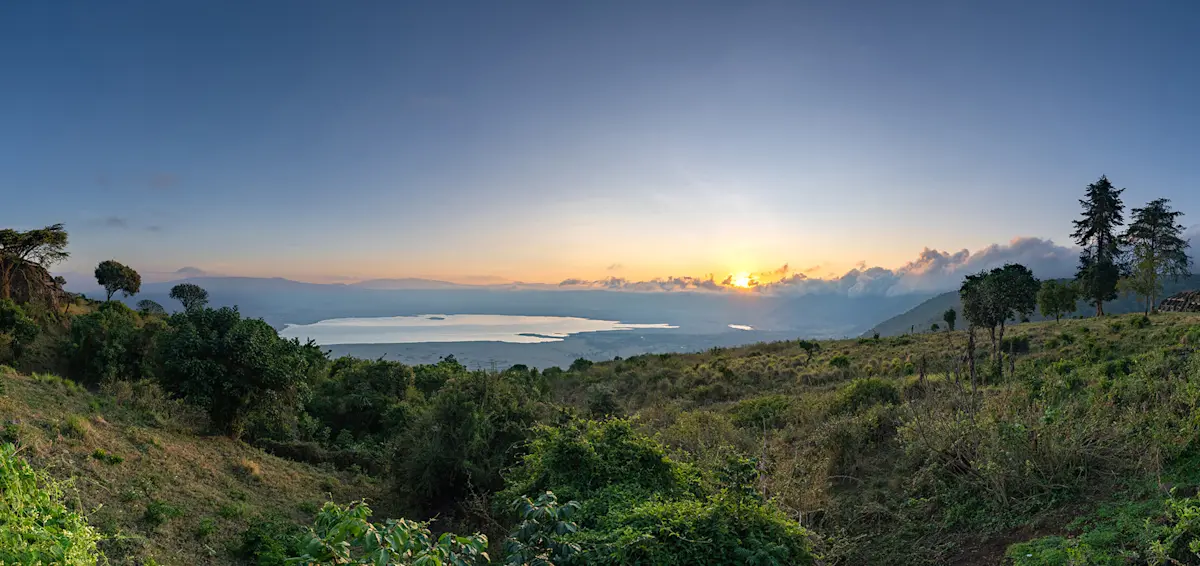
The crater is already home to one of Tanzania’s most important populations of critically endangered black rhinos. The experience and infrastructure developed to protect black rhinos provide a strong foundation for supporting a second rhino species.
Introducing southern white rhinos also allows two species with different ecological roles to thrive within the same ecosystem.
Black Rhinos vs. White Rhinos
Now that visitors to Ngorongoro Crater may encounter both white and black rhinos, it’s more useful than ever to know how to tell them apart. Two of the easiest clues are their mouth shape and size. The white rhino’s broad, square mouth inspired its name, which is widely believed to come from the Afrikaans word wyd, meaning “wide,” rather than its color. White rhinos are also much larger, ranking as the second-largest land mammal after elephants.
This infographic highlights the key differences in their size, features, diet, and behavior.
Gallery
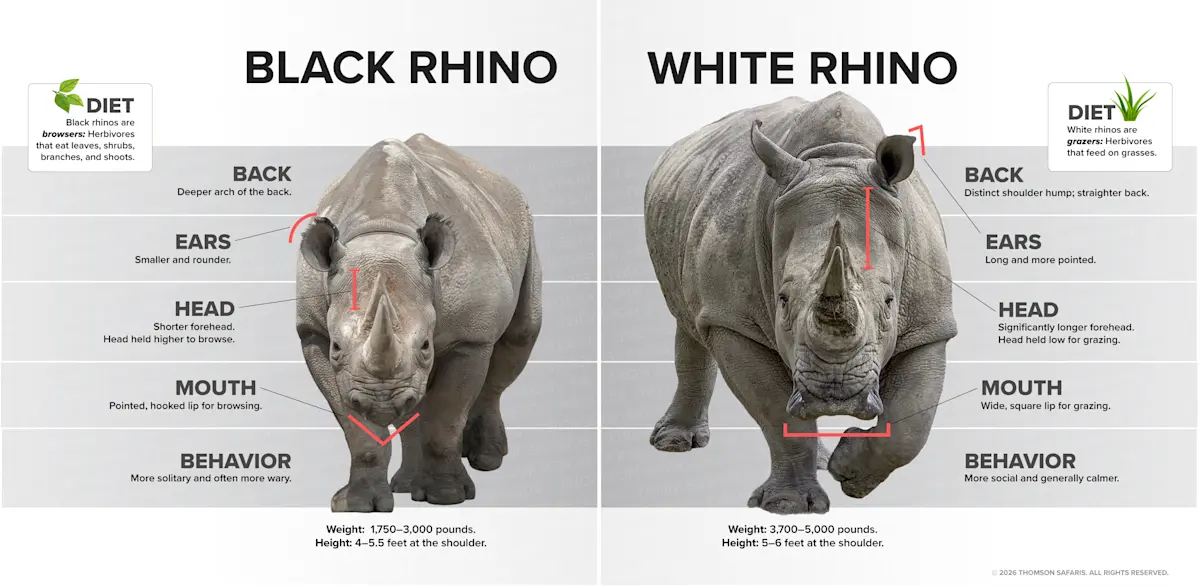
White and black rhinos share many similarities, but differ in size, feeding habits, behavior, and habitat preferences.
Black rhinos and white rhinos each play a unique role in maintaining the balance of Ngorongoro Crater. Black rhinos browse shrubs and trees, helping prevent woody vegetation from overtaking the landscape and creating space for new plant growth. White rhinos graze on grasses, keeping grasslands healthy and encouraging fresh shoots that benefit other grazing animals. Together, they help sustain the diverse habitats that support the Crater’s remarkable biodiversity.
The Next Phase of Conservation
Following their acclimation period in the bomas, the rhinos were released into Ngorongoro Crater in late spring 2026.
Today, wildlife authorities continue to monitor the rhinos through GPS tracking, veterinary care, and ongoing protection. Because rhinos reproduce slowly, conservationists will be watching several key indicators over the coming years:
Survival: Are the rhinos adapting successfully to their new environment?
Breeding: Are they producing and successfully raising calves?
Population growth: Can the founding group develop into a stable breeding population?
Genetic diversity: Does the population remain healthy over future generations?
The release marked an important milestone, but the true measure of success will take years — or even decades — to evaluate.
What Thomson Safaris Guests Are Seeing
For Thomson Safaris guests, the arrival of white rhinos has added an exciting new wildlife viewing opportunity in Ngorongoro Crater.
Unlike the crater’s typically solitary black rhinos, southern white rhinos are often seen in small groups, making it easier to appreciate the differences between the two species. Some individuals can also be identified by GPS tracking devices used by wildlife managers to monitor their movements and adaptation as part of the ongoing project.
Seeing both rhino species during a wildlife viewing drive offers a unique perspective on how different animals can occupy distinct ecological niches while sharing the same landscape. It also allows guests to witness one of East Africa’s most significant wildlife restoration efforts as it unfolds.
Gallery
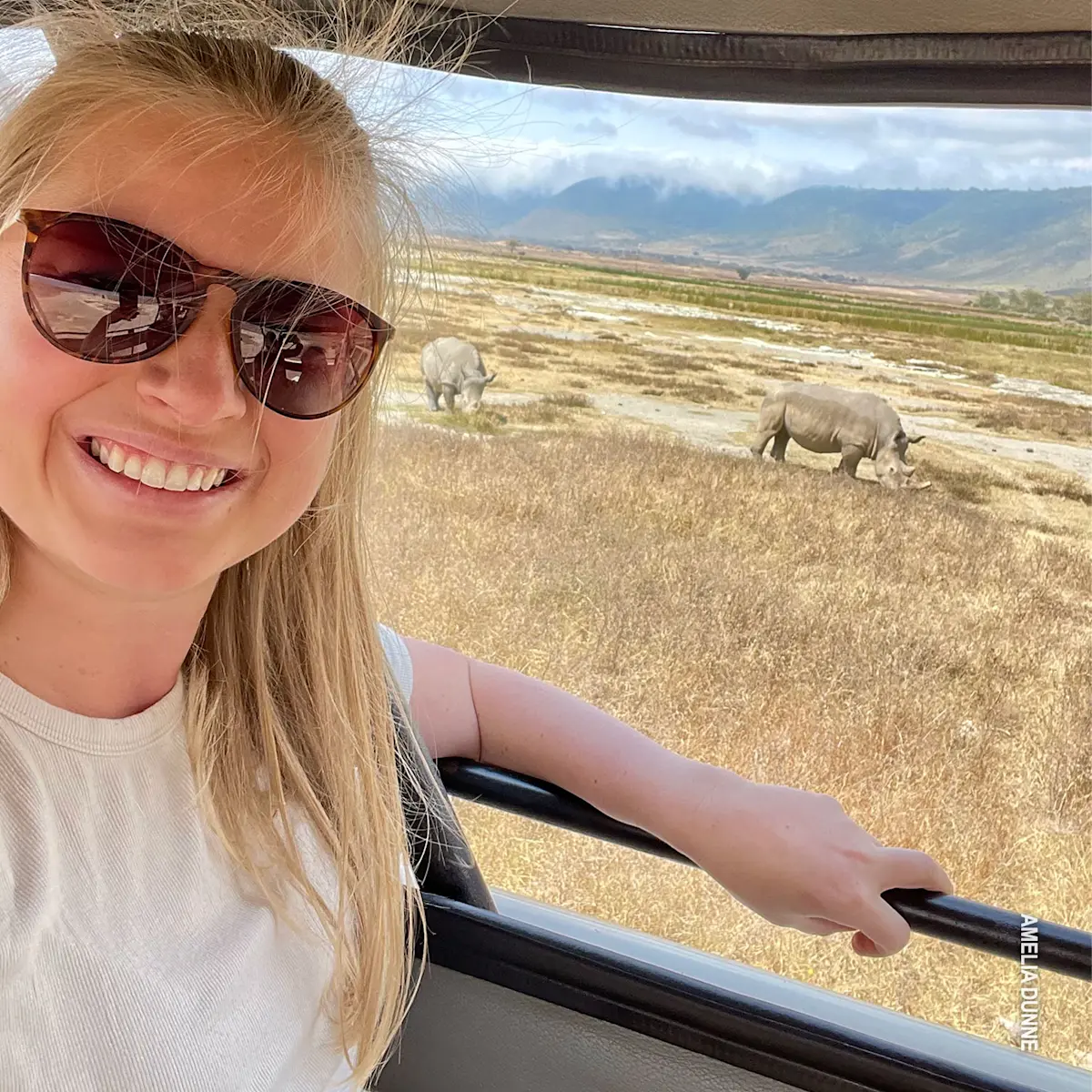
Left: Thomson guest Amelia takes selfie with the newly introduced white rhinos on her safari in July 2026.
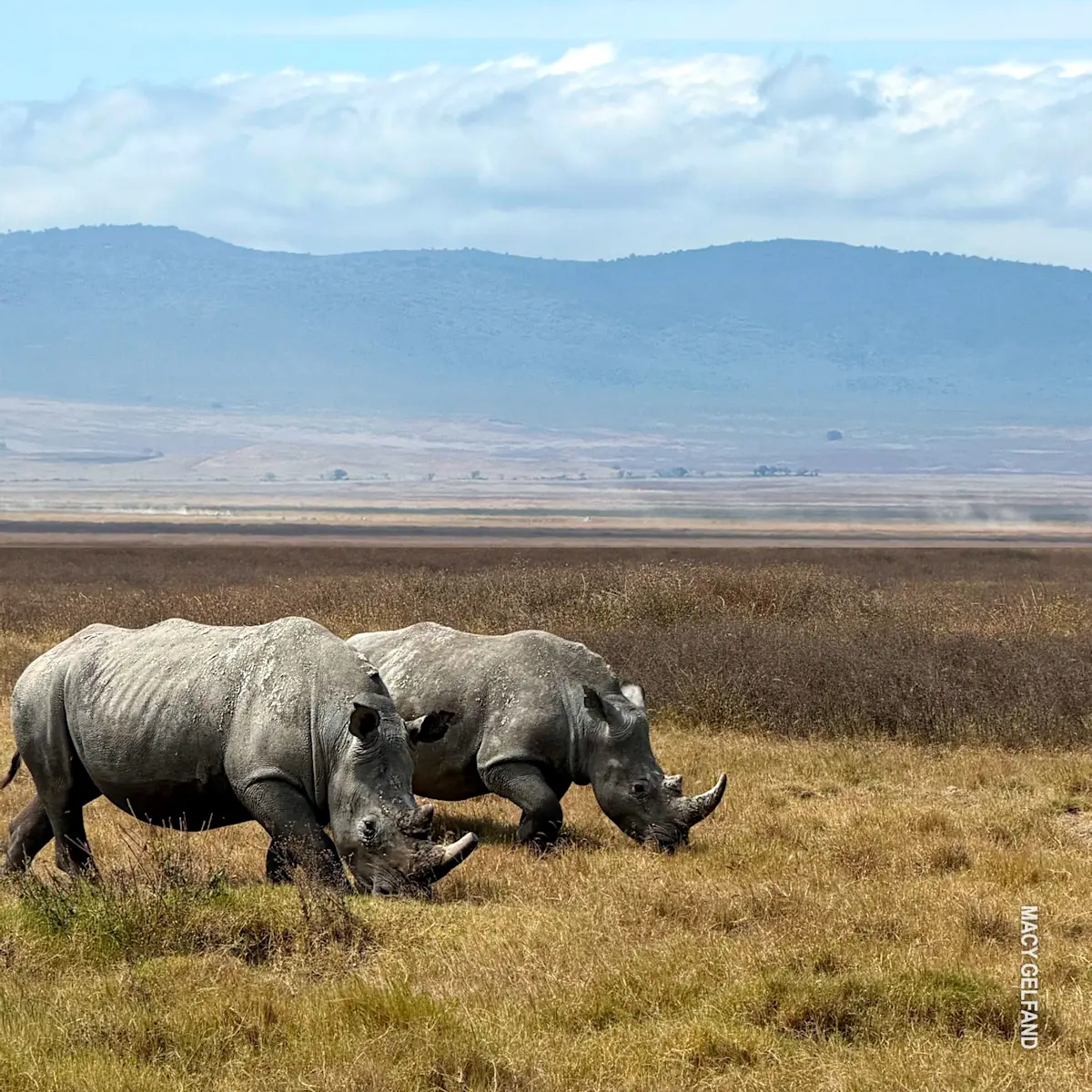
Right: A pair of white rhino photographed by Thomson Safaris guest Macy Gelfand in July 2026.
A New Rhino Experience in Ngorongoro Crater
Rhinos are one of Africa’s famous Big Five animals, and the arrival of southern white rhinos adds a remarkable new dimension to the safari experience in Ngorongoro Crater. Along with the chance to see both rhino species, visitors may also witness this ambitious wildlife conservation initiative unfolding in real time.

Thomson Safaris guest Macy Gelfand experienced that firsthand, capturing this rare moment as veterinarians fitted a southern white rhino with a GPS collar, an important tool for monitoring the health and movements of the growing population.
While it will take years to know whether the project ultimately succeeds, the arrival of southern white rhinos represents one of Tanzania’s most significant wildlife conservation initiatives in decades. Rather than reading about conservation history after the fact, today’s safari travelers have the opportunity to observe it as it unfolds.
Frequently Asked Questions About White Rhinos in Ngorongoro Crater
Why were white rhinos introduced to Ngorongoro Crater?
Southern white rhinos were introduced as part of a conservation initiative to establish a genetically diverse breeding population in Tanzania. Creating additional populations outside South Africa helps reduce extinction risk and strengthens the species’ future.
Are white rhinos native to Ngorongoro Crater?
No. Southern white rhinos did not historically live in Ngorongoro Crater. They were introduced through an assisted colonization project after conservationists determined that the crater provides suitable habitat and long-term protection.
Can you see both black and white rhinos in Ngorongoro Crater?
Yes. Since the 2026 release of southern white rhinos, visitors have the opportunity to see both critically endangered black rhinos and southern white rhinos during a wildlife viewing drive in Ngorongoro Crater.
How many white rhinos were introduced?
The project began with the translocation of 18 southern white rhinos from South Africa to Tanzania in 2025. The long-term goal is to grow the founding group into a self-sustaining population of approximately 36 animals.
When were the white rhinos released?
After spending more than a year acclimating in secure bomas, the southern white rhinos were released into Ngorongoro Crater in late spring 2026.
Where else can I see white rhinos on safari?
While Ngorongoro Crater is now home to a growing population of southern white rhinos, another unforgettable rhino experience awaits in Kenya’s Ol Pejeta Conservancy. Thomson’s Tembo Explorer Safari includes a visit to this renowned conservancy, where guests can see the world’s last two northern white rhinos and learn about the groundbreaking conservation efforts protecting them. Together with the newly reintroduced southern white rhinos in Ngorongoro Crater, these experiences offer a powerful look at two very different rhino conservation success stories.
Experience Tanzania’s Wildlife Legacy
For more than 45 years, Thomson Safaris has shared Tanzania’s extraordinary landscapes and wildlife with our guests. We’re excited to continue following the conservation stories that make Tanzania so remarkable — and to share these moments with future guests who join us in Tanzania.