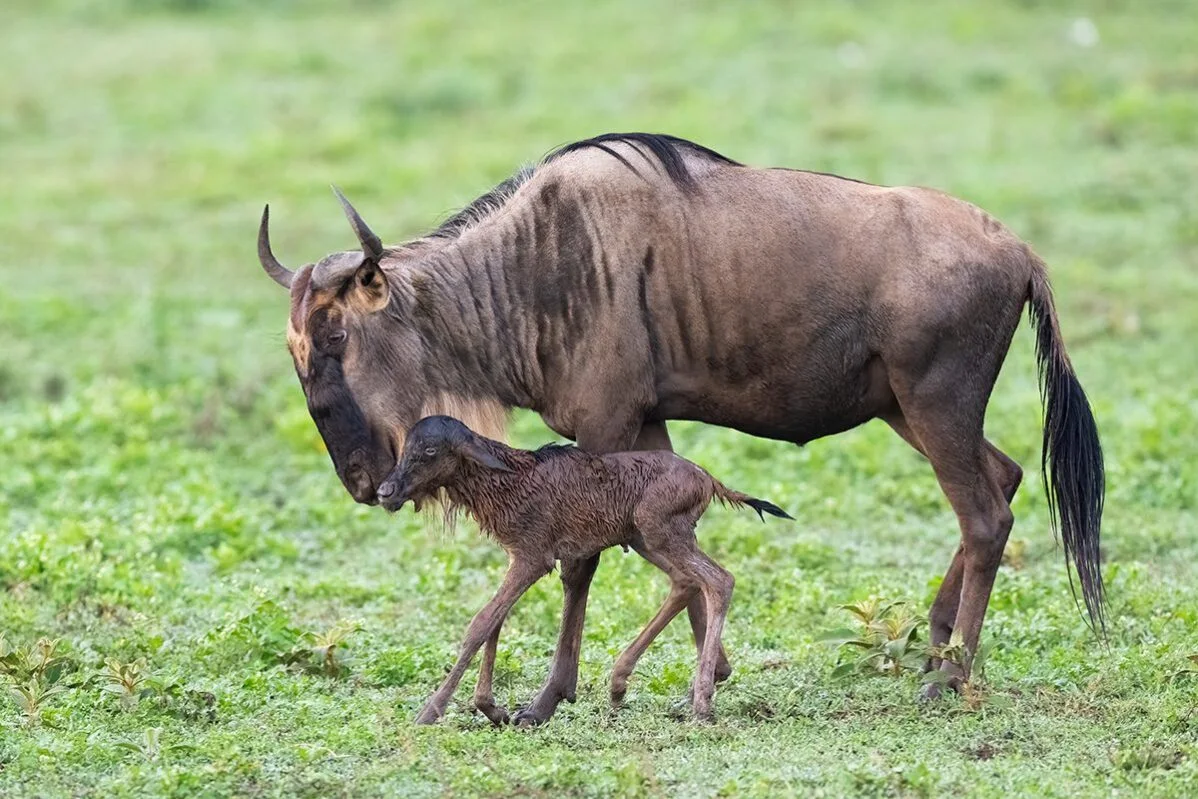
While exploring Tanzania’s Ngorongoro Crater, Thomson Safaris guests Jim and Cathy Wright witnessed a rare wildlife moment: a wildebeest giving birth to her calf.
Under the direction of their safari guide Onesmo, Jim and Cathy got into position and quietly watched the entire event unfold. With his camera rolling, Jim captured the calf’s first minutes of life on video, from its arrival into the world to the determined struggle to stand and take its first steps. The result is a rare and intimate look at the earliest moments of a wildebeest’s life.
The voices behind the footage
Turn up the volume. Jim and Cathy’s genuine reactions are part of what makes this video so memorable. Their encouragement and anticipation make you feel like you’re right there, cheering the calf on as it struggles to find its footing and sharing in the awe of the moment when it finally stands.
For Cathy, a retired biology professor, the experience was particularly special. She could appreciate the science behind the moment while also simply enjoying the wonder of witnessing a new life begin in the wild.
The first steps of a wildebeest calf
For a newborn wildebeest, life begins with a remarkable challenge. Within minutes of birth, the calf must begin the process of standing and learning to move alongside its mother.
Those first attempts are anything but graceful. A calf’s long legs, which will eventually help it run across Tanzania’s open grasslands, initially seem unsteady and unfamiliar. But instinct quickly takes over. After several determined attempts, the calf finds its balance and begins moving.
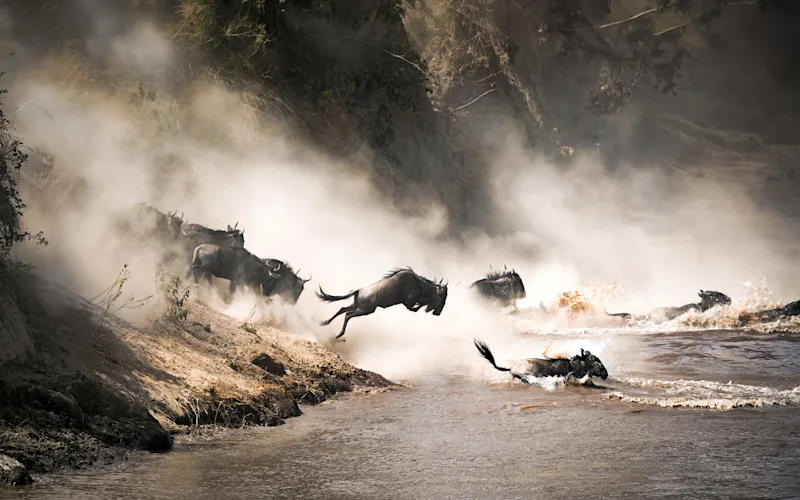
This ability is one of the wildebeest’s most remarkable adaptations. Unlike many young animals that spend days or even weeks hidden and dependent on their mothers, wildebeest calves must become mobile almost immediately. Within a short time after birth, they are able to walk and begin keeping pace with the herd, an essential skill for survival on the open plains, where staying close to the herd helps protect vulnerable calves from predators.
Wildebeest in the Ngorongoro Crater
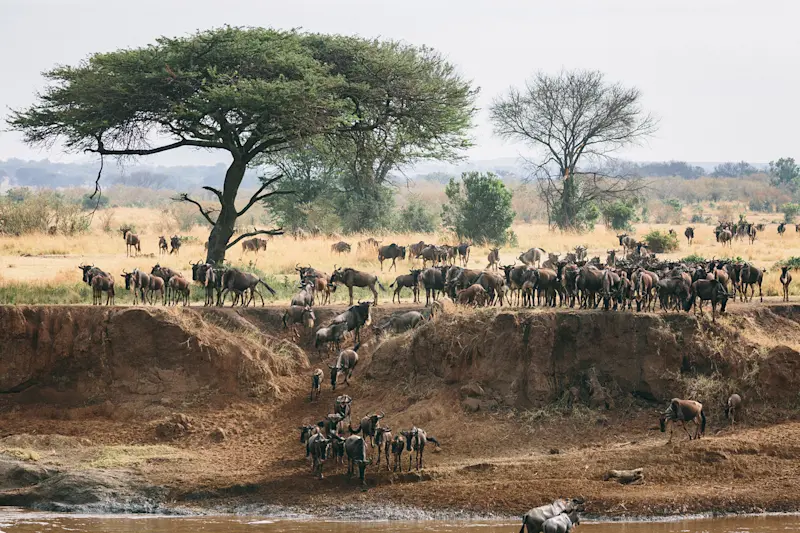
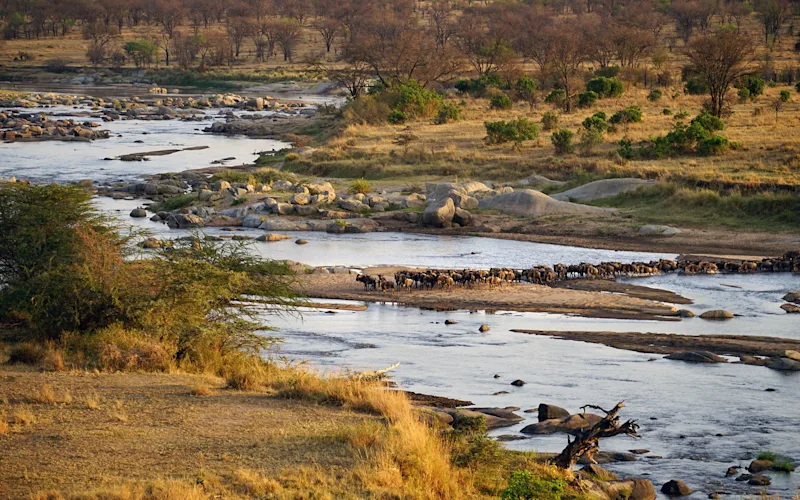
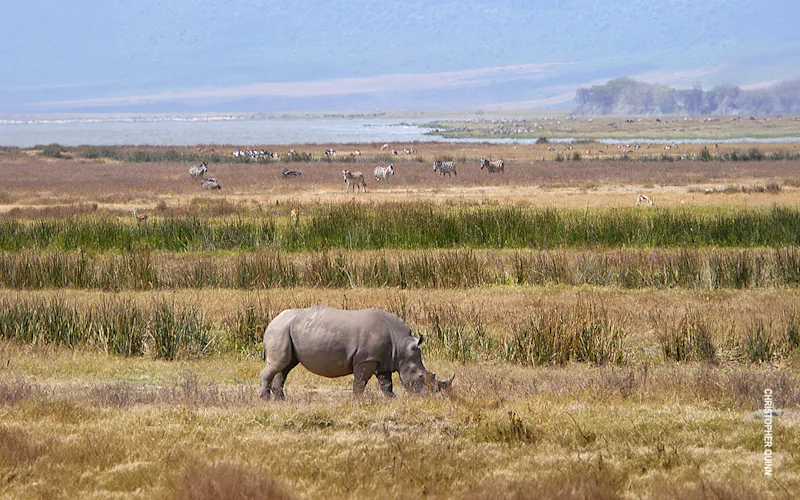
The Ngorongoro Crater is one of Tanzania’s most remarkable wildlife destinations and an important habitat for wildebeest and other iconic African species. This ancient volcanic caldera provides a unique habitat where grasslands, forests, and wetlands support an incredible diversity of animals, including wildebeest, zebras, elephants, lions, and many other species.
Gallery
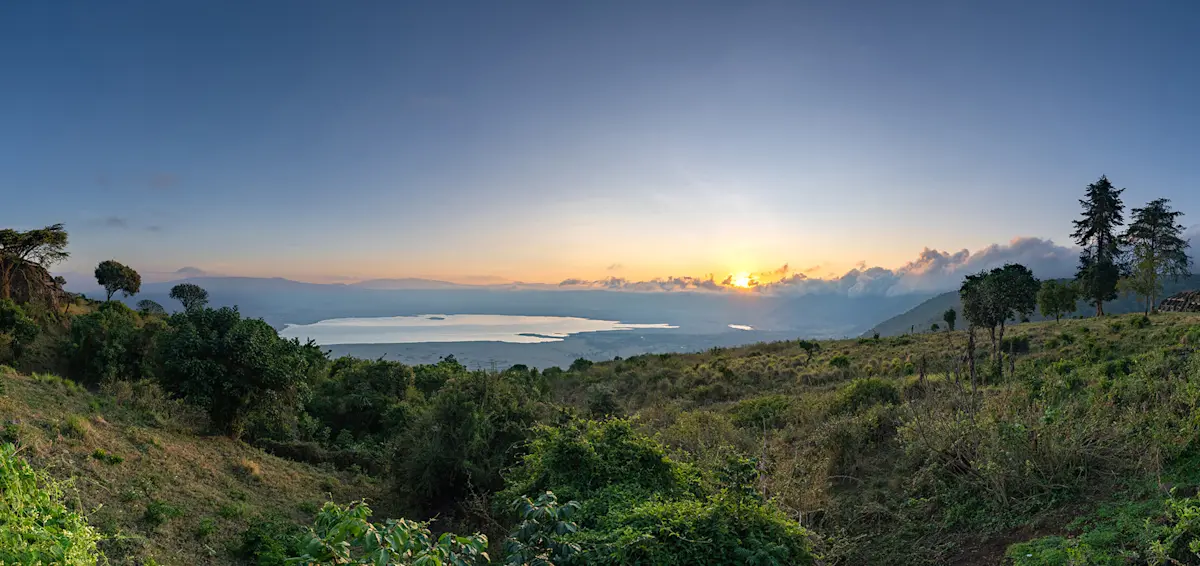
Because wildlife is naturally concentrated within the Crater’s boundaries, visitors often have the opportunity to observe fascinating animal behaviors — from predator-prey interactions to family bonds and moments of new life.
A rare moment in the wild
Few people ever have the opportunity to witness a moment like this firsthand. We’re grateful to Jim for sharing his footage and allowing others to experience the first moments of a wildebeest calf’s life in Tanzania’s Ngorongoro Crater.