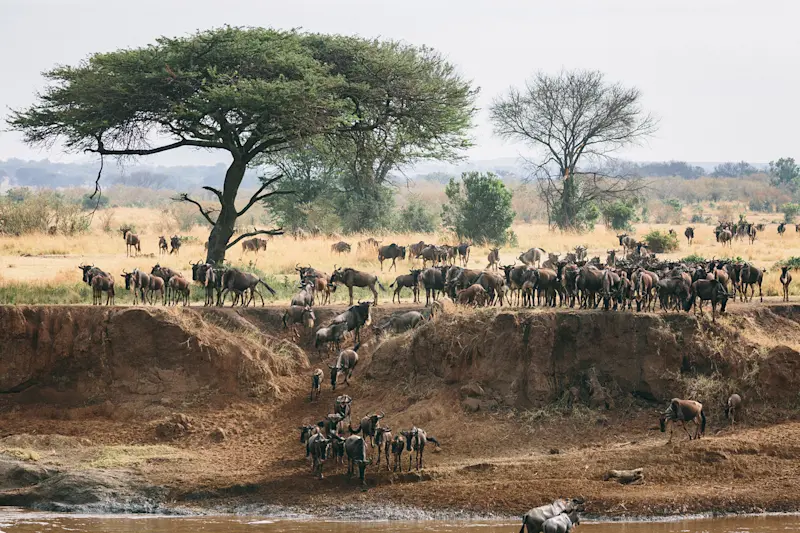
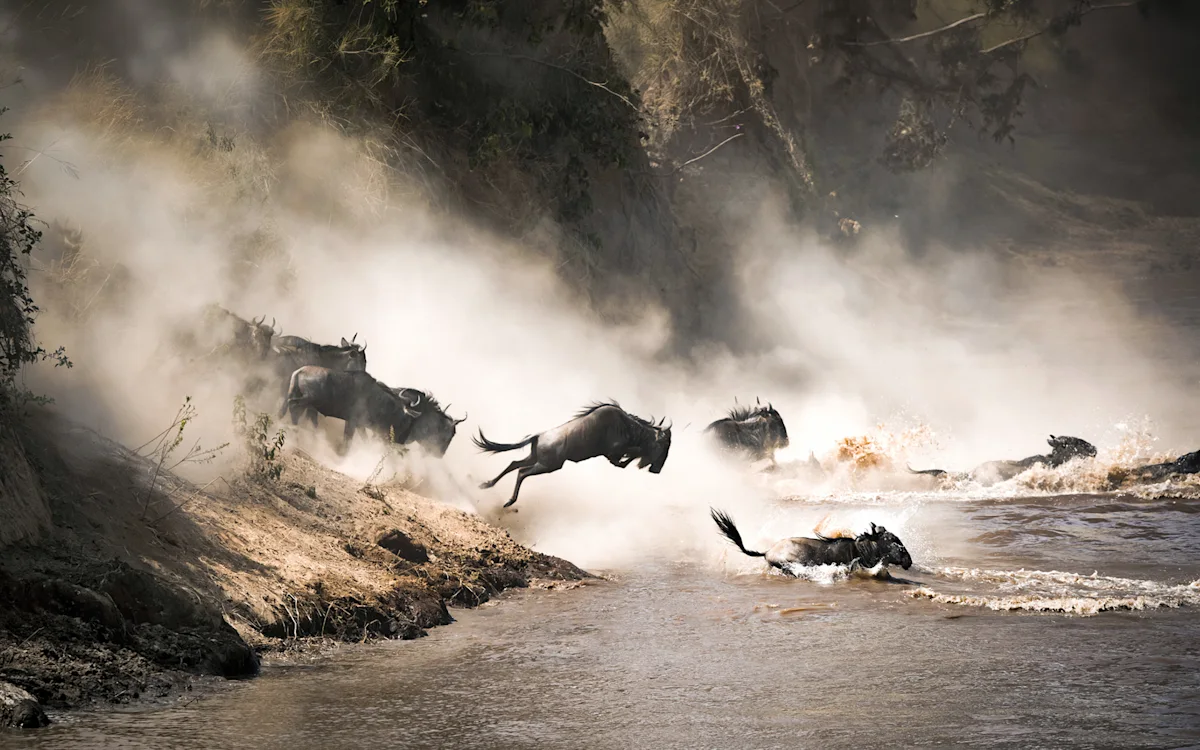
The Great Migration is at the top of almost every safari bucket list, yet it’s also one of Africa’s most misunderstood wildlife events. For many travelers, it’s defined by a single iconic image: thousands of wildebeest crossing crocodile-filled rivers in the Serengeti.
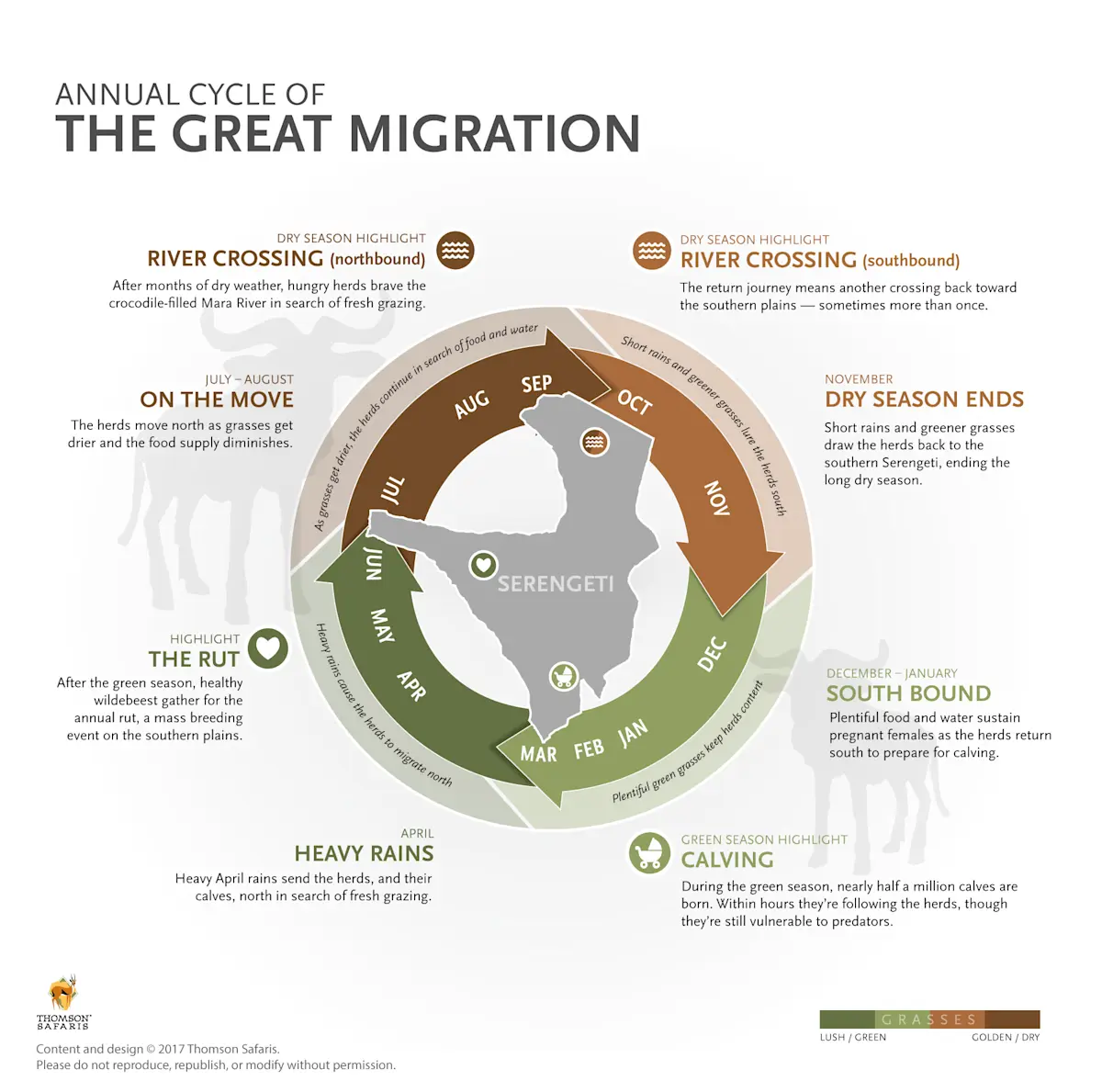
But what exactly is the Great Migration? Contrary to popular belief, it isn’t a single event. It’s a year-round cycle involving more than two million wildebeest, along with hundreds of thousands of zebra and gazelle, moving across Tanzania’s Serengeti ecosystem in search of fresh grazing.
Understanding how the migration works helps you choose the best time for your safari and appreciate what makes each season unique.
Gallery
What Causes the Great Migration?
The Great Migration is driven by one simple force: grass.
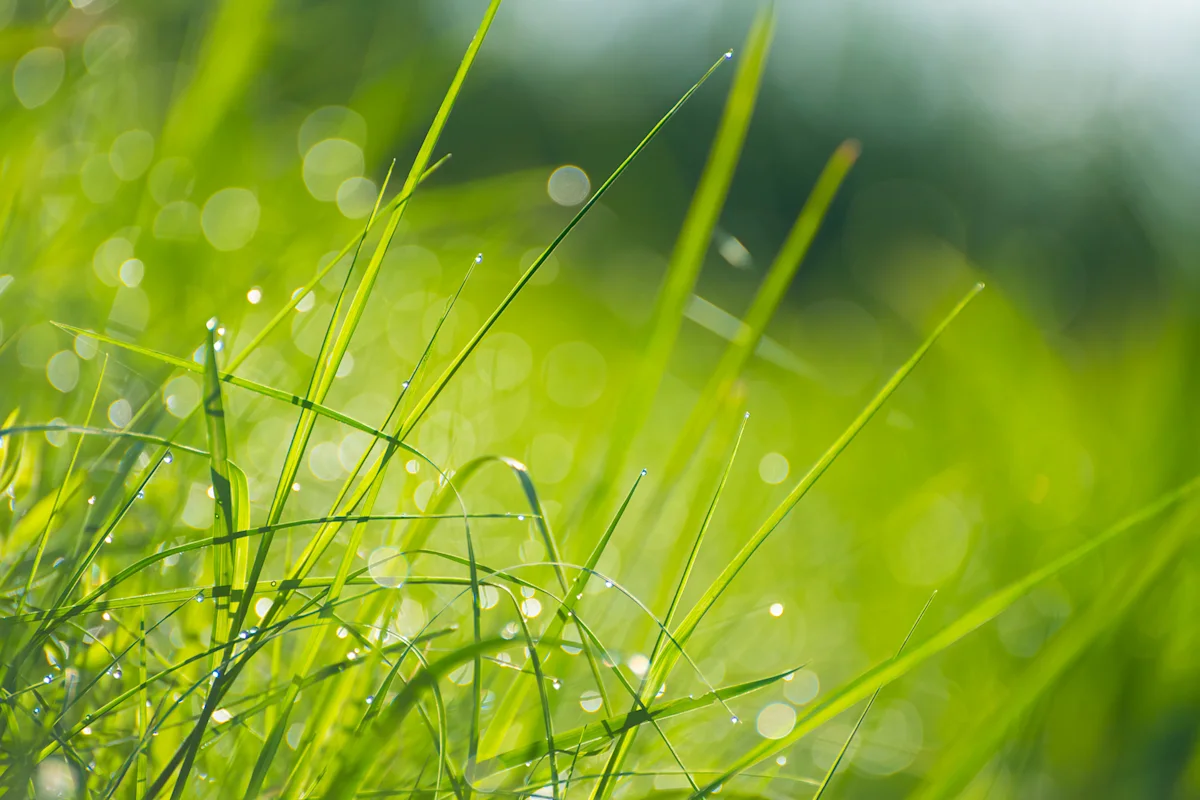
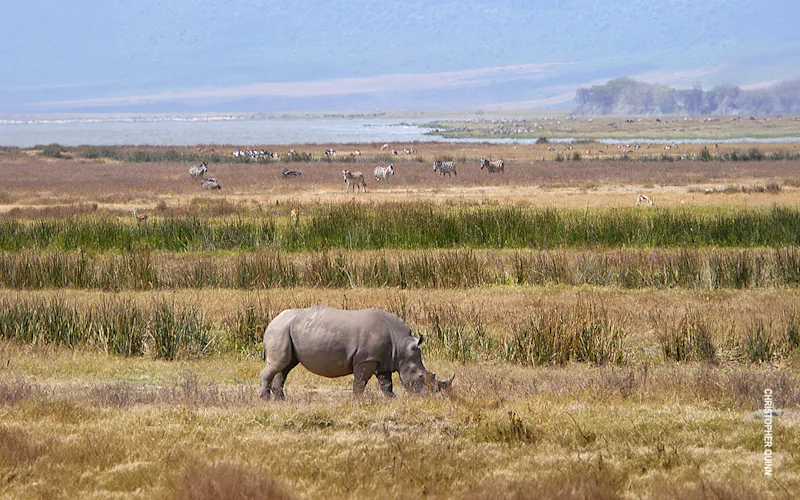
As seasonal rains move across the Serengeti, fresh grazing appears in different regions, and the herds follow. Zebra typically arrive first, feeding on taller grasses. Wildebeest follow, grazing closer to the ground, while gazelle feed on what remains.
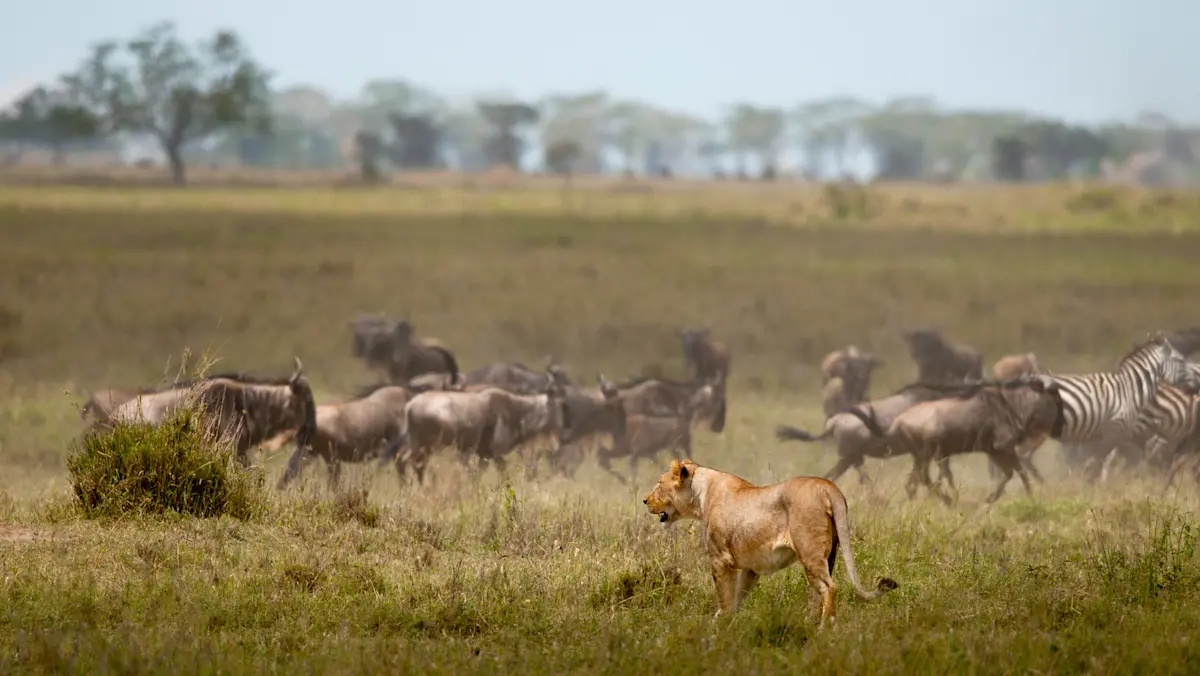
Together, they sustain an extraordinary ecosystem. Lions, cheetahs, leopards, and hyenas closely follow the herds, creating some of Africa’s most exciting wildlife viewing.
The Rut
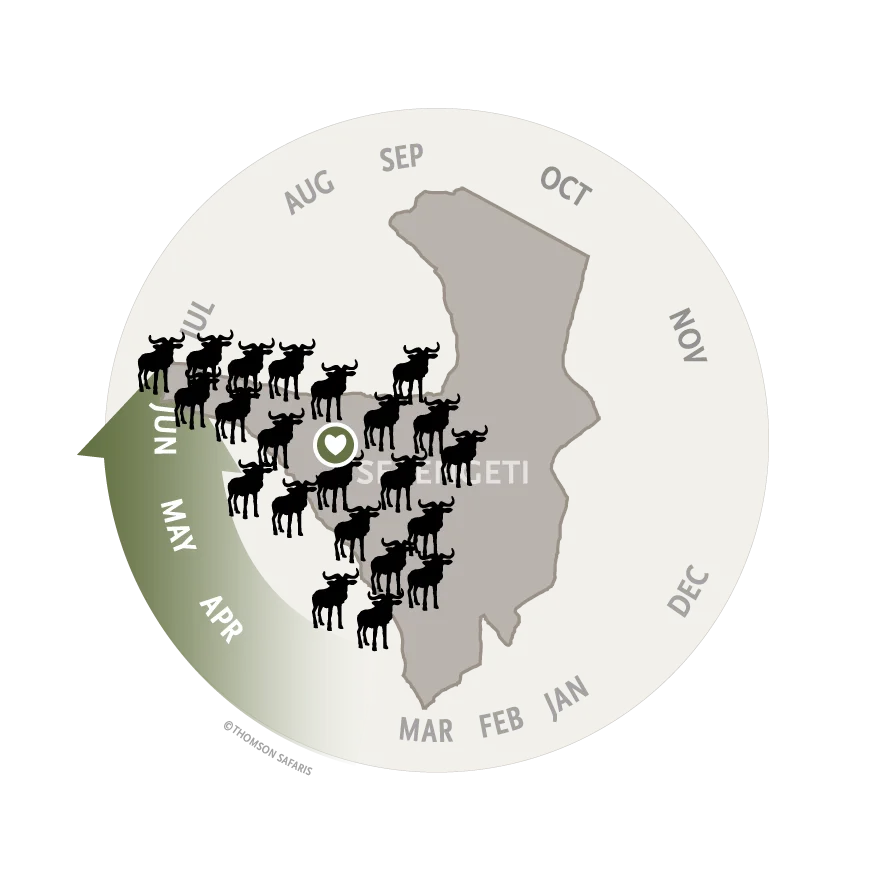
Great Migration Mating Season: May – June
As the landscape begins to dry after the green season and the heavy rains of April, the migration moves through the central and western Serengeti during May and June.
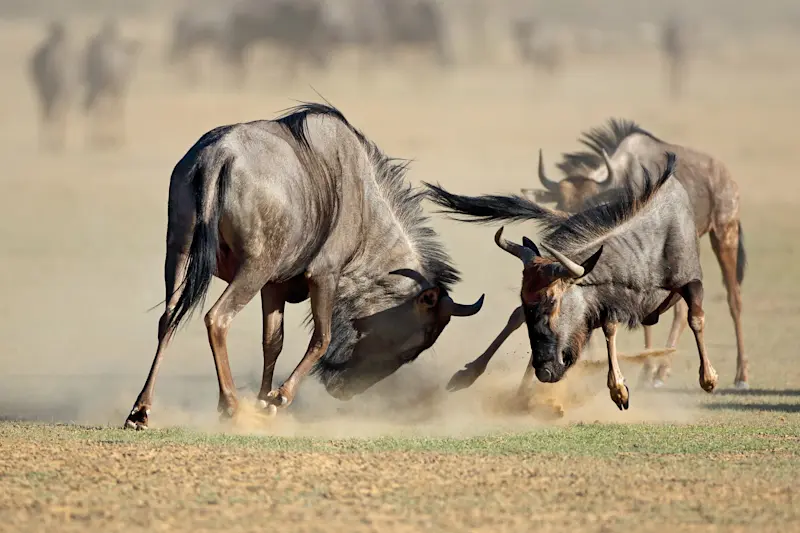
This is the rut, or wildebeest mating season. Males compete for breeding rights, often engaging in dramatic head-to-head battles.
At the same time, massive herds continue moving across the plains, creating the iconic Serengeti scenes many travelers expect. It’s a striking moment to witness both scale and behavior unfolding together.
River Crossing Season
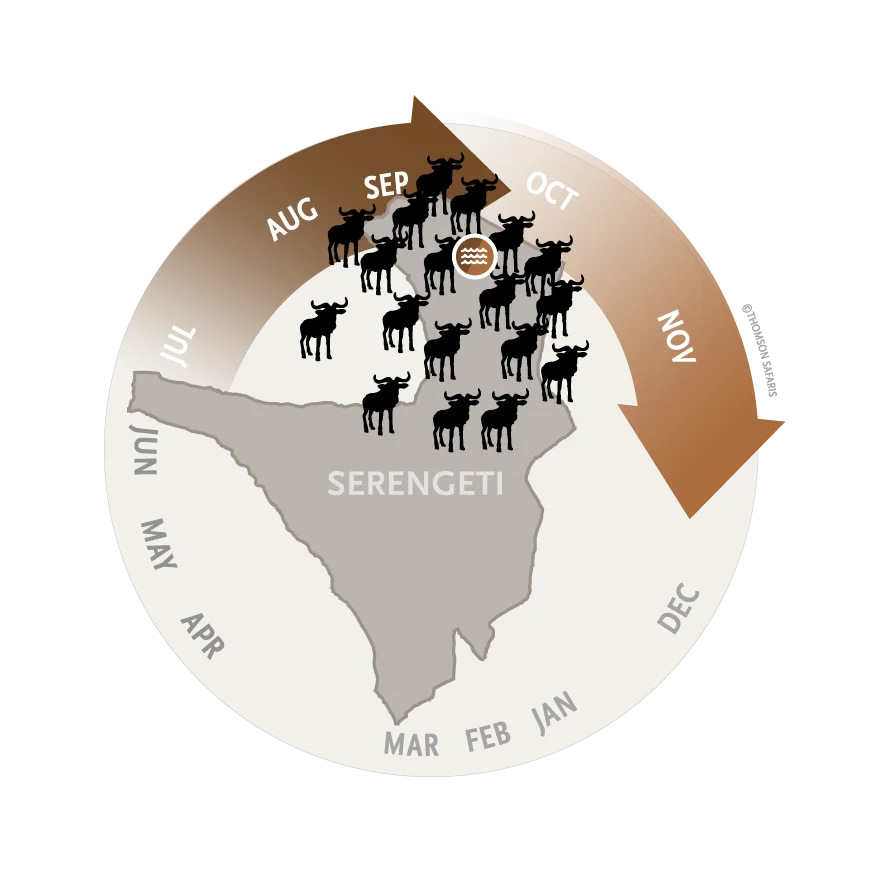
Great Migration season: July – October
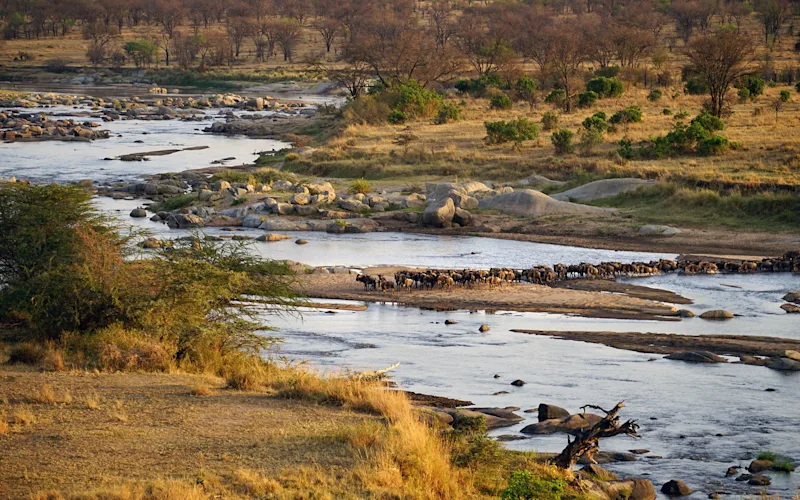
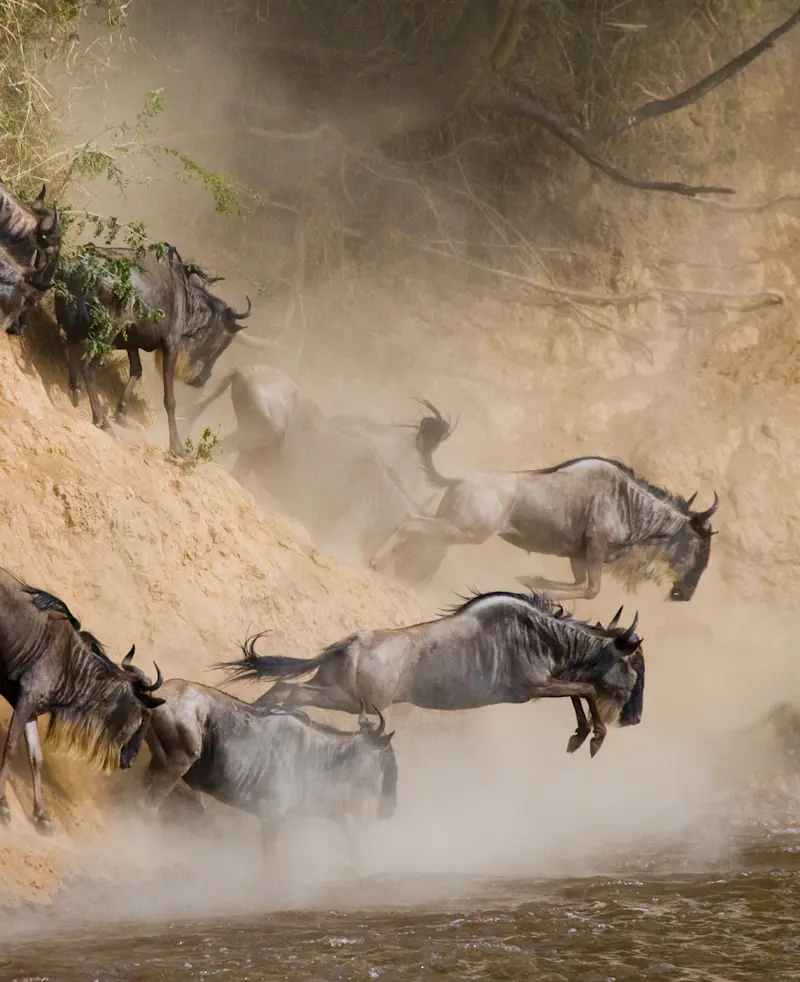
For many, river crossings are the defining image of the Great Migration.
From July through September (and sometimes into October), the herds reach the northern Serengeti and face the Mara River and its tributaries. When river crossings happen, they can be among the most dramatic wildlife events on Earth.
What often surprises travelers is how unpredictable they are. Herds may wait at the riverbank for hours — or days — before crossing, or they may turn back entirely.
Because of this uncertainty, river crossings are best viewed as a remarkable bonus, not the reason to plan a safari. Exceptional wildlife viewing happens throughout the year, with or without a river crossing.
Calving Season
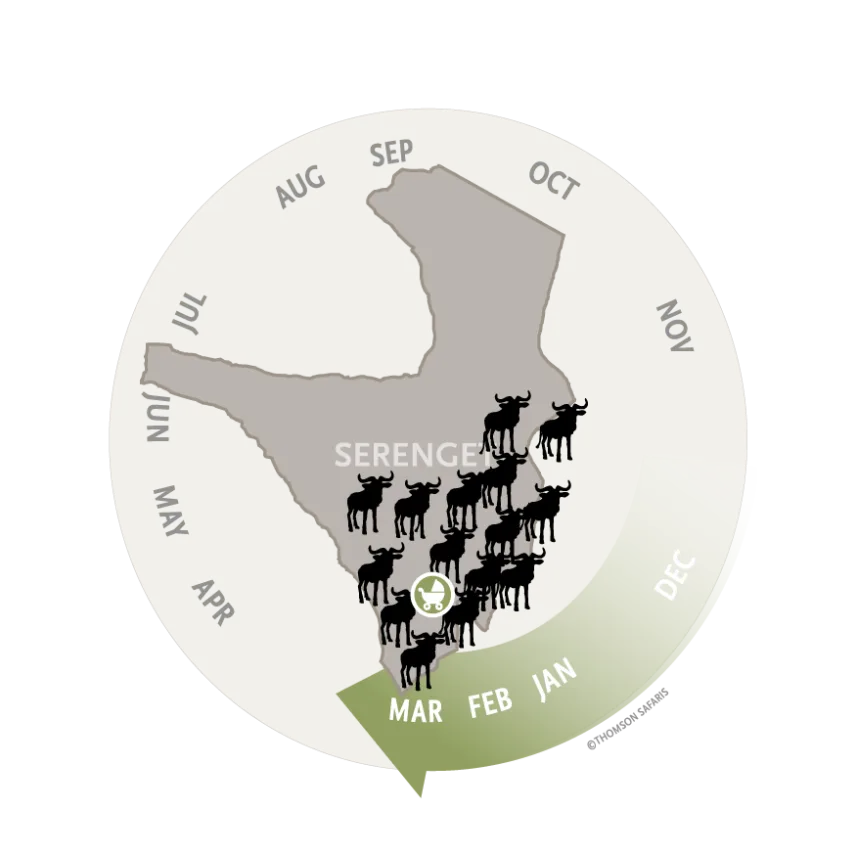
Great Migration season: January – March
If river crossing season is about drama, calving season is about new life.
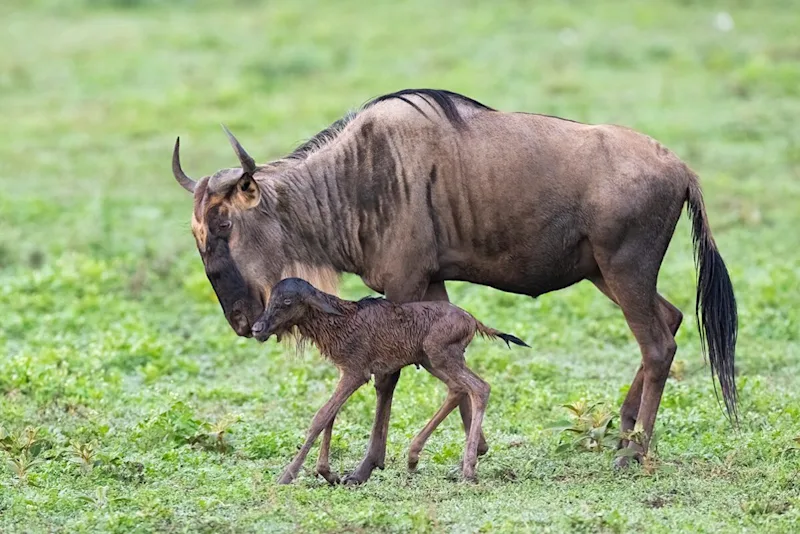
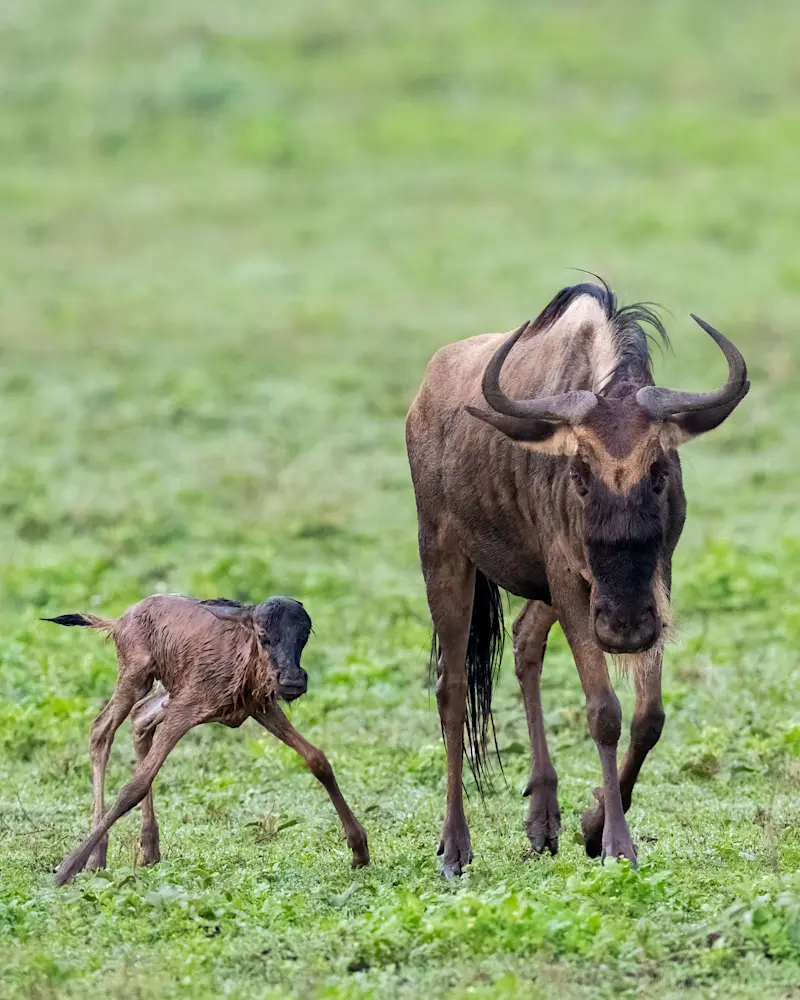
From January through March, herds gather on the nutrient-rich southern Serengeti plains to give birth. Over several weeks, thousands of calves are born each day.
The landscape is lush and green, wildlife is abundant, and young animals appear everywhere. Newborn wildebeest stand within minutes and quickly join the herd.
Calving season also attracts predators, offering frequent predator-prey encounters. For many travelers, it’s one of the most rewarding times in the Serengeti.
Is There a Best Time to See the Great Migration?
One of the most common questions travelers ask is, “When is the best time to visit the Serengeti?” The answer depends on what you hope to experience. Every stage of the Great Migration offers something unique.
Gallery
Calving season is ideal for newborn wildlife and green landscapes. River crossing season offers the chance, though never a guarantee, of dramatic crossings. The rut highlights animal behavior and competition.
The key is that the Great Migration is always happening. Rather than a single event, it’s a continuous, year-round cycle, with each season revealing a different chapter of one of nature’s greatest spectacles.
Why Thomson Safaris?
Because the migration is constantly moving, choosing the right safari operator — and where you stay — can make all the difference.
For over 45 years, Thomson Safaris has focused exclusively on Tanzania, designing itineraries around the movement of the herds. Thomson-exclusive seasonal Nyumba camps are positioned to keep travelers close to the action.
Gallery
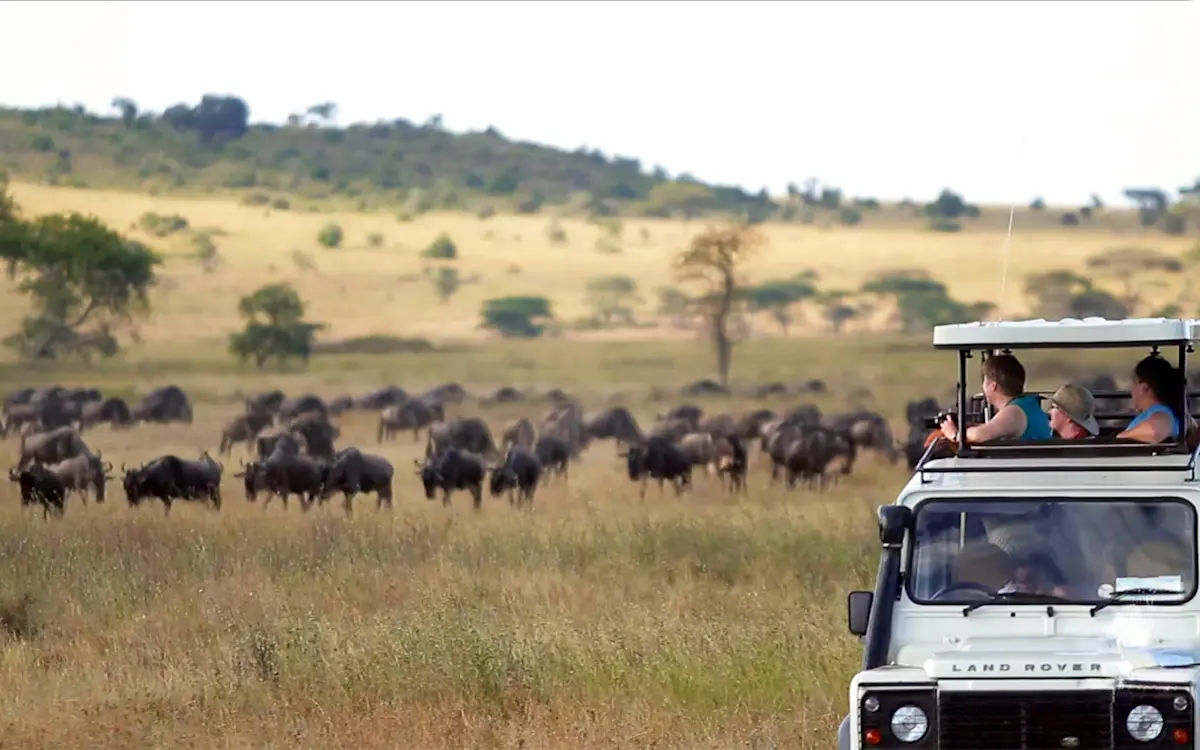
Select itineraries also include walking safaris, night drives, and off-road wildlife viewing on Thomson-exclusive private Eastern Serengeti Nature Refuge.
Your safari is led by expert Tanzanian guides whose deep knowledge of wildlife, ecology, and local culture helps bring the Serengeti to life. Combined with meaningful opportunities to connect with local communities, these experiences offer a deeper understanding of Tanzania beyond the wildlife alone.
Experience the Great Migration for Yourself
The Great Migration is remarkable not because of a single moment, but because it is a continuous cycle that unfolds across Tanzania’s Serengeti ecosystem year after year.
Whether you witness the rut, a river crossing, or calving season, you’re seeing one chapter of an extraordinary story.